
Many travelers and worldschooling families want to stay in Europe longer than 90 days, but the Schengen short-stay rule can make planning confusing. This guide explains how to stay in Europe longer than 90 days legally in 2026, including the Schengen 90/180 rule, long-stay visas, digital nomad visas, and rotation strategies using non-Schengen countries.
Understanding the Schengen 90/180-Day Rule
The Schengen Area allows travelers from visa-exempt countries to stay up to 90 days within any rolling 180-day period. This rule applies to the entire Schengen Area collectively, not to each country individually.
Key elements of the rule include:
- the 180-day period is rolling
- both entry and exit days count as full days
- the rule applies to all Schengen countries combined
- each traveler is counted individually by passport
To calculate your legal stay, immigration authorities look backward 180 days from the present date and count how many days you have already spent inside the Schengen Area.
Travelers planning extended international living should always calculate their travel calendar before entering the Schengen Area.
Families planning longer stays often combine immigration planning with education planning. Our guide
Worldschooling Curriculum Framework for Families (2026 Guide) explains how families maintain learning continuity while living abroad.

Schengen Countries in 2026
As of 2026, the Schengen Area includes 29 countries.
| Category | Countries |
|---|---|
| EU Schengen Members | Germany, France, Italy, Spain, Netherlands, Belgium, Austria, Greece, Portugal, Sweden, Finland, Denmark, Poland, Czech Republic, Hungary, Slovakia, Slovenia, Lithuania, Latvia, Estonia, Malta, Croatia, Bulgaria, Romania |
| Non-EU Schengen Members | Switzerland, Norway, Iceland, Liechtenstein |
| Non-Schengen Europe | Ireland, United Kingdom, Turkey, Serbia, Montenegro, Albania, Bosnia & Herzegovina, Georgia |
Travel time spent in non-Schengen countries does not count toward the Schengen 90-day limit.
Travelers comparing destinations should also consider infrastructure and living costs. Our article
How to Choose the Best City for Long-Term Family Living explains how housing, transport systems, and education access affect relocation decisions.

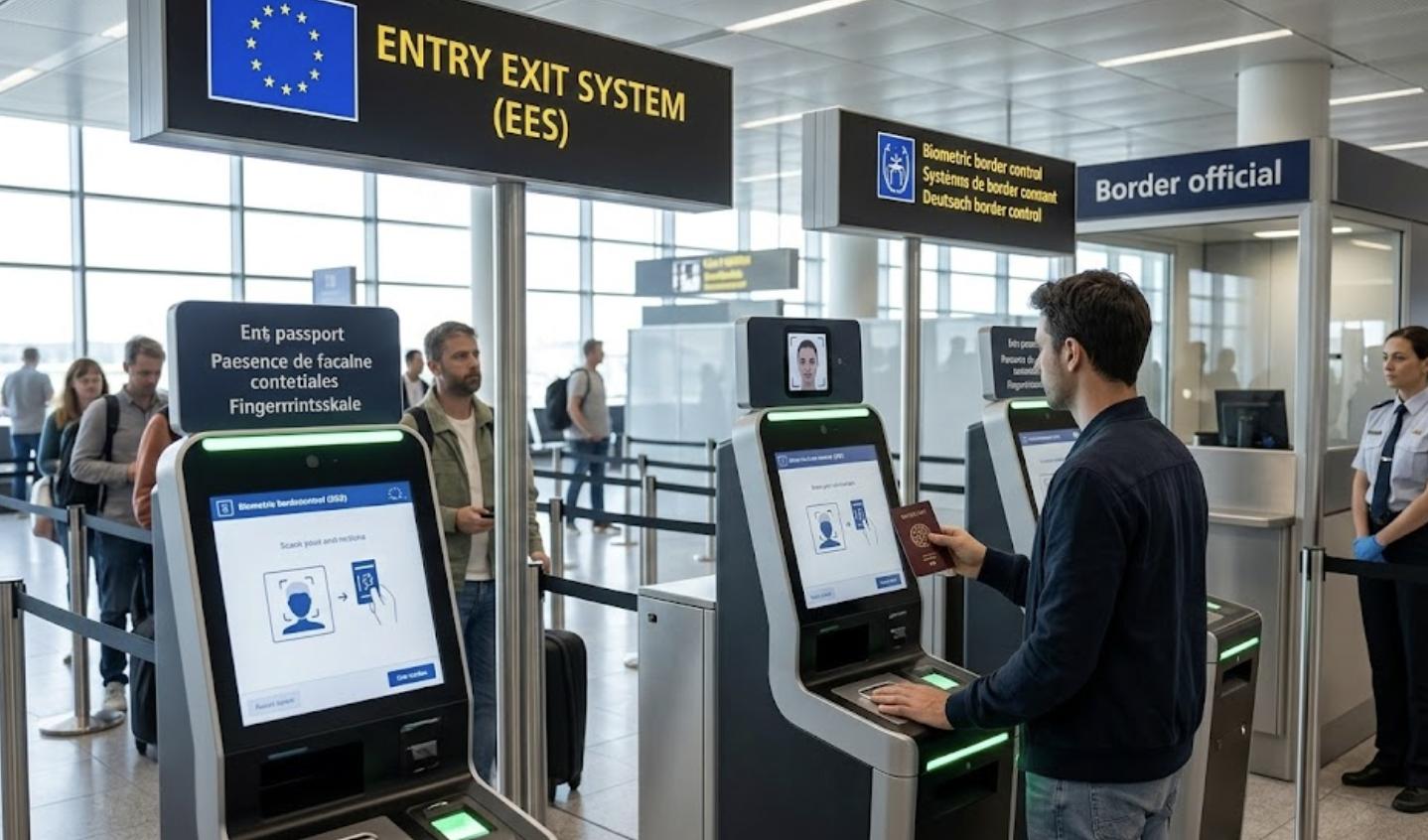
2026 Border Control Changes: EES and ETIAS
Europe is introducing digital border control systems designed to improve immigration monitoring.
Entry Exit System (EES)
The Entry Exit System digitally records border crossings for non-EU travelers.
The system records:
- passport details
- biometric information such as fingerprints and facial recognition
- exact entry and exit timestamps
The purpose of EES is to replace traditional passport stamps and improve detection of overstays.
As border control becomes more automated, travelers should maintain clear travel records.
ETIAS Travel Authorization
ETIAS is a pre-travel authorization required for visa-exempt travelers entering the Schengen Area.
Important characteristics:
- ETIAS is not a visa
- travelers must apply online before arrival
- approval is linked to the passport used for travel
According to official announcements, ETIAS is expected to begin operating in late 2026, although exact implementation dates may vary depending on policy updates.
Travelers should always confirm current requirements through official government announcements.
Legal Ways to Stay in Europe Longer Than 90 Days
Travelers who want to stay in Europe longer than 90 days typically use one of the following legal pathways.
| Category | Support Type | Usage Scope | Period | Important Notes |
|---|---|---|---|---|
| Digital Nomad Visa | National residence permit | Remote work with foreign income | 6-12 months typical | Income thresholds vary |
| Long-Stay Visitor Visa | National visa | Non-working residents | Up to 12 months | Requires proof of savings |
| Student Visa | National visa | Education programs | Course duration | Some countries allow part-time work |
| Non-Schengen Rotation | Tourist stay | Travel between regions | Flexible | Requires calendar tracking |
Eligibility criteria, financial requirements, and permitted activities depend on national immigration policies. These requirements may change depending on policy updates.
For financial planning considerations, readers may review
How Much Does Worldschooling Cost? (2026 Family Budget Guide), which compares cost structures for internationally mobile families.

Digital Nomad Visas in Europe
Digital Nomad Visas (DNV) are increasingly used by remote workers who wish to stay in Europe longer than 90 days.
Although requirements vary between countries, typical conditions include:
- proof of remote income
- employment or business activity outside the host country
- health insurance coverage
- background check documentation
- proof of accommodation
Income requirements are often linked to national minimum wage levels.
For example:
| Scenario | Estimated Requirement |
|---|---|
| Minimum wage $1,200 (USD) (As of 2026, many programs require 200-400% of the national minimum wage) | Required income $2,400–$4,800 (USD) depending on program |
These figures vary significantly depending on the country and should always be verified through official immigration authorities.
Travelers comparing potential destinations should evaluate both visa policies and local living costs.
Many digital nomad visa holders eventually compare living costs between potential base cities.
Our guide on cost structures for internationally mobile families explains typical monthly expenses when living abroad.
Non-Schengen Rotation Strategy
Some travelers prefer to remain on tourist status and rotate between Schengen and non-Schengen countries.
This strategy is commonly called Schengen rotation.
Common non-Schengen destinations include:
- United Kingdom
- Ireland
- Serbia
- Montenegro
- Albania
- Georgia
These countries operate independent immigration systems, so time spent there typically does not count toward the Schengen 90-day rule.
Example Rotation Strategy
| Travel Pattern | Result |
|---|---|
| 90 days in Schengen | 0 days remaining |
| 30 days outside Schengen | regain 30 days allowance |
| 90 days outside Schengen | full reset |
Leaving for only a weekend does not reset the Schengen allowance.
Travelers should simulate a travel calendar before relying on rotation strategies.
Families who travel frequently between regions often combine mobility planning with worldschooling strategies to maintain stable learning routines.
Worldschooling Curriculum Framework
Tax Residency Considerations
Immigration status and tax residency are separate legal systems.
Many countries use the 183-day rule to determine tax residency.
If a traveler spends more than 183 days in one country during a tax year, that country may consider the traveler a tax resident.
Possible implications include:
- tax reporting obligations
- taxation on global income
- financial disclosure requirements
However, tax rules vary significantly between jurisdictions. Travelers should verify requirements through official government tax authorities or licensed professionals.
Common Misunderstandings About Staying in Europe Longer Than 90 Days
Several myths often appear in online discussions.
Myth: Leaving the Schengen Area for one day resets the clock.
Reality: The rule is rolling. Only days falling outside the 180-day window restore your allowance.
Myth: Children do not count toward the limit.
Reality: Each traveler is counted individually.
Myth: All EU countries belong to Schengen.
Reality: Ireland is an EU member but not part of Schengen.
Understanding these differences helps travelers avoid unintentional immigration violations.
Frequently Asked Questions
Q1) Can someone stay in Europe for six months continuously?
Generally not under the standard Schengen tourist rule. Travelers who wish to remain longer usually require a national long-stay visa or residence permit.
Q2) Can travelers apply for a digital nomad visa while already in Europe?
Some countries permit in-country applications while others require applications through consulates abroad. Travelers should verify the correct procedure through official immigration authorities.
Q3) Do entry and exit days count toward the Schengen 90-day rule?
Yes. Both the entry date and the exit date are counted as full days inside the Schengen Area.
Q4) Is Ireland part of the Schengen Area?
No. Ireland maintains its own immigration system.
Q5) Does holding a long-stay visa lead to permanent residency?
In some countries, time spent under a valid residence permit may count toward permanent residency eligibility. However, eligibility periods vary depending on national policy.
How to Stay in Europe Longer Than 90 Days (Schengen Guide 2026) Verification Checklist
Before planning extended travel, readers should confirm the following items:
- visa eligibility for their nationality
- permitted length of stay for each visa type
- income thresholds for long-stay visas
- permitted work activities
- local registration obligations after arrival
Travelers should confirm these details through official government websites or the public institution responsible for immigration administration, as regulations may change depending on policy updates.
Planning a Long-Term Stay in Europe
Travelers planning extended stays should follow a structured planning approach.
- Decide whether residency or tourist rotation is the preferred strategy.
- Compare housing and living costs between potential base cities.
- Confirm visa eligibility and document requirements.
- simulate a one-year travel calendar.
- keep digital records of travel history.
For families combining travel with education, additional planning considerations apply. Our article
Best Countries for Worldschooling Families examines how visa rules, cost structures, and educational infrastructure interact.
Final Planning Checklist
How to Stay in Europe Longer Than 90 Days Verification Checklist.
Before finalizing your European stay, verify the following:
- [ ] Current visa-waiver eligibility for your nationality.
- [ ] Updated income thresholds for your target visa (2026 rates).
- [ ] Timeline for Apostilles and translations (allow 2–3 months).
- [ ] Run a 1-year simulation using an official **Schengen Calculator**.
- [ ] Local registration procedures (e.g., NIE in Spain, NIF in Portugal).
Long-term life in Europe is a rewarding journey that begins with administrative precision. Always confirm details through official government portals.

The Emma Family’s Personal Strategy
Many families planning extended stays in Europe discover that visa rules, education planning, and cost-of-living structures are closely connected.
The following perspective reflects our personal experience and does not replace legal or immigration advice.
Our family prioritizes stability over constant relocation.
Rather than repeatedly resetting the Schengen clock through short tourist stays, we prefer establishing a base country through a long-stay visa or residency pathway.
Our strategy typically includes:
- selecting a stable base country
- maintaining predictable education routines
- traveling within Schengen during permitted periods
- spending longer breaks in non-Schengen countries
This approach reduces administrative stress while supporting education continuity and family routines.
Each family should adapt this strategy according to their legal eligibility, financial resources, and long-term goals.
Recommended Related Guides
Families planning long-term travel often combine visa planning with education structure.
Our guide on worldschooling curriculum frameworks explains how mobile families maintain learning continuity.
Readers planning to stay in Europe longer than 90 days may also find the following guides helpful. These articles explain the financial, educational, and city selection frameworks that often influence long-term relocation decisions.
1. How to Choose the Best City for Long-Term Family Living
Not every city supports long-term international living equally. This guide explains how to evaluate cities based on infrastructure reliability, cost-of-living stability, education access, healthcare systems, and visa frameworks. How to Choose the Best City for Long-Term Family Living
2. Real Cost of Worldschooling for Families (2026 Budget Guide)
Understanding cost structures is essential before planning a long-term stay abroad. This guide explains the typical monthly expenses for internationally mobile families, including housing, transportation, education resources, and healthcare considerations.
How Much Does Worldschooling Cost? (2026 Family Budget Guide)
3. Worldschooling Curriculum Framework for Families (2026 Guide)
Families who travel internationally often need a structured approach to maintain academic continuity while moving between countries. This guide explains how mobile families organize learning routines, document educational progress, and design long-term worldschooling systems.
Worldschooling Curriculum Framework for Families (2026 Guide)


You must be logged in to post a comment.